




A Private Life (Vie Privée) - Reformed Magazine
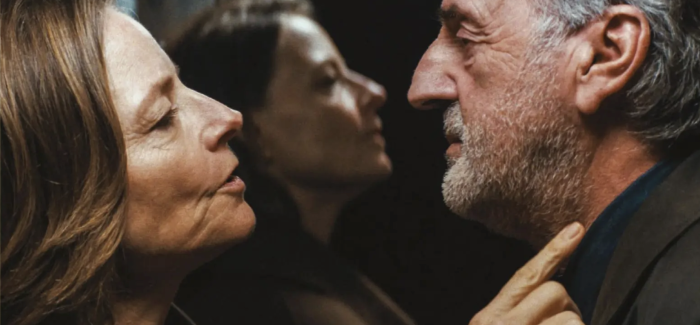
Directed by Rebecca Zlotowski
Certificate 15
107 minutes
Released 26 June
This film defies easy categorisation. For a start, it is a French production in the French language with the main character played by a Hollywood star acting on the screen in French for the first time. That star is Jodie Foster, and she is as good here speaking French as she is in many of her English-speaking roles.
She occasionally talks to herself in American English, so even if you’d never seen her act in any previous film, this would give away that she is actually American. And yet you forget this is someone you have never seen act in French before.
Foster plays a Parisian psychiatrist, Lilian Steiner, who is having a hard time. One longstanding patient has quit his sessions after a hypnotherapist cured him of smoking. Another, Paula, has missed her last two sessions. It turns out that Paula has died; her daughter Valérie (Luana Bajrami) invites Dr Steiner to the Shemira, a Jewish pre-burial custom, where it becomes apparent Paula’s husband Simon blames Steiner for his wife’s death.
From here, the plot – which is not always easy to follow – thickens, and as it does so, Dr Steiner drags her ophthalmologist husband Gabriel (Daniel Auteuil) into it. If the film might reasonably be described as a mystery, it goes off in other, strange directions.
For instance, Dr Steiner has an eye problem which causes her to cry involuntarily. And she has flashbacks about Paula (Virginie Efira) which not only suggest complications in theirrelationship but also cast the two of them as orchestra members forced to play to an audience of Nazi officers during the war.
Dr Steiner has to deal with her ex-partner, and with her estranged son Julien (Vincent LaCoste) and his child, so there’s a lot going on here about non-functioning family units.
There also seems to be a lot going on about Jewish identity and antisemitism, but I must admit that on a single viewing, I was unable to get to the bottom of this.
Nevertheless, it is a curiously engrossing piece which I will happily revisit to try and grasp the finer points of what is happening. An intriguing puzzle.
Jeremy Clarke is a film critic. His website is jeremycprocessing.com


Submit a Comment