


A picture of faith: Interview with Neil Thorogood - Reform Magazine
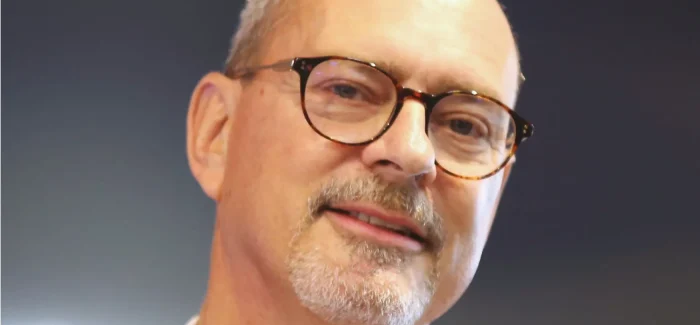
Neil Thorogood has gone from local minister to Principal of Westminster College and back again. He is also the URC’s next Moderator of General Assembly. He talks to Reform about family, theology through painting and where the URC is today.
Your surname is a familiar one in the history of the URC.
Yes. It’s not a name that allows you to be inconspicuous. My dad, Bernard, was a missionary with the London Missionary Society (LMS), and he and Mum spent eighteen years in the South Pacific. Then in 1970, he was posted back to the LMS headquarters in London, where he was involved in the conversations that led to the LMS evolving into the Council for World Mission, and overturning the whole pattern of mission. The idea that mission was westerners being sent to other parts of the world was no longer viable. Instead, mission was a round table where all Churches were equal partners, however old or new, and they would all pool their resources.
He did that for ten years then became General Secretary of the URC until he retired in 1992, the year I was ordained. He was on the central committee of the World Council of Churches, and involved in creating Churches Together in Britain and Ireland and Churches Together in England. He said he was amazed God had given him a vocation to be a church bureaucrat as it was not something he looked for. My mother, Jeanette, was a URC Elder and my uncle Derek was an organist, so the family has URC written through it.
What was that like for you?
To begin with, it was fabulous. I grew up in Rarotonga, with school in the morning and swimming in the lagoon in the afternoon. I was six when we moved, and I vividly remember sailing into Southampton in the sleet, standing on the rail of the Northern Star, crying. Why on earth have we left? But it gave me a profound sense that I belong to the world Church.
Once we were back in this country, our home was a stopping-off place for Church folk who were coming here from all over the world for meetings.
As General Secretary, I do remember my dad being away a lot, and I didn’t feel any bitterness about that, but it gave me a sense that ministry isn’t just local, it takes you to other parts of the country, or of the world. The other thing it did for me: I was absolutely convinced I was never going to be a minister. I suspect I was a bit overawed, and I thought, There’s no way I can approach anything like that.
How did your call come then?
I didn’t know what I wanted to do after school, but I enjoyed geography and I was interested in the world, and that led me to SOAS, the School of Oriental African Studies at London University. I imagined I would go into overseas development work. I lived in the URC student hostel, in King’s Cross, and some of us went to a URC conference on world mission. A few of us students sat up late there, putting the world to rights. And I had this absolutely remarkable experience. As clear as you are speaking to me, a voice beside me said, ‘No, I want you to be a minister.’ I was stunned.
I had this weird year…
This is an extract from Reform, Issue 1-2026


Submit a Comment