


Let God in - Reform Magazine
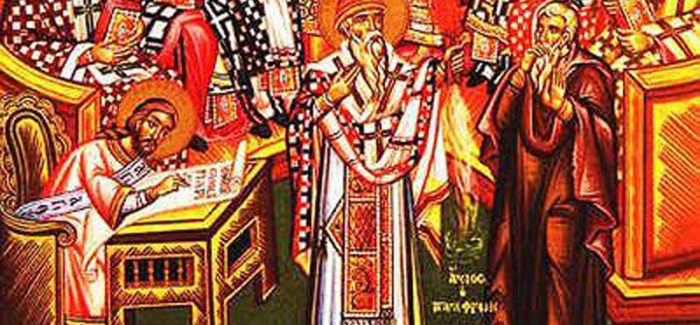
Our Church’s idea of God has to change, says John Bradbury, General Secretary of the URC, in a powerful call to renewal
…The primary exponent of the position that the Council of Nicaea came to embrace was Athanasius, who was a young priest at the time of the council itself. He spelt out the significance of the issue: God is not distant, unsullied by engagement with the world. God is in the midst of the world in Christ, in the day-to-day life of suffering, pain and brokenness, and joy, celebration and laughter.
As Nicene theology developed, so did the idea that the Holy Spirit is active in the midst of creation, uniting us with Christ, drawing us to the Father. God is not a philosophical idea, a creator who creates and then withdraws, who only deals with creation through intermediaries. God creates, and then dwells with, and in, and amid that creation. God is known fully in Christ.
The United Reformed Church first came into being in 1972 in a secular, scientific world, where the idea of God being active in the midst of creation seemed difficult to sustain. Theology, represented by John Robinson’s Honest to God, or Don Cupitt’s sea of faith, sought to recast faith away from the supernatural and unbelievable.
Those were the theological waters in which many in the URC were swimming at the time of union. They are theological waters which formed me too. They very much captured the imagination of my dad, one of the first theological influences on me. I believe such movements were a genuinely faithful attempt to make the Gospel understandable, and to articulate it, in the modern world. However, over a lifetime so far of struggle as a Christian disciple and theologian, I have come to see how profoundly lacking this is.
The danger is it removes God from…
___
This is an extract from an article published in Issue 6 2025 edition of Reform


Submit a Comment