


The Road to Patagonia - Reform Magazine
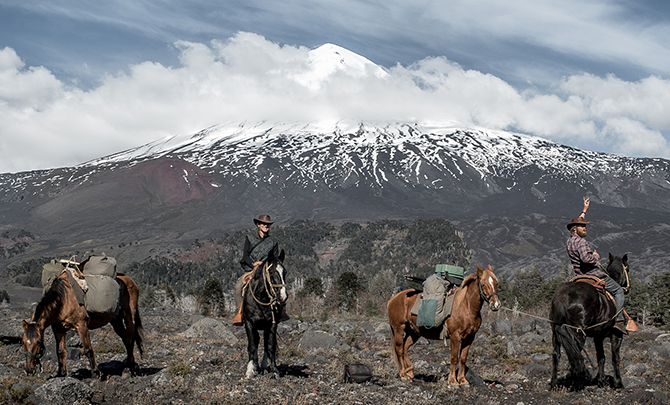
Directed by Matty Hannon
Certificate 15
90 minutes
Released 27 June
In his mid-20s, former ecology student and keen surfer Matty Hannon returns to Melbourne, Australia. For five years, from age 21 to 26, he has lived alongside one of Indonesia’s Sumatran Island tribes, a utopia where people live in harmony with nature, assigning spirit gods to rivers and mountains. And then there are the waves.
Melbourne hits him with culture shock; a culture that refers to its people as consumers, where national success is measured in terms of how much they buy. Depression is common. Hannon records his response in this documentary as he gets out, takes a tent to Alaska, then stays with the community-oriented, small scale, sustainable farm owner Heather in Vancouver, Canada.
He leaves on his motorbike – fitted with home-built rig to carry tent, surfboard, fuel and other possessions – to travel down the West Coast of the Americas to Patagonia. He keeps writing to Heather. His bike is stolen in Baja California, Mexico; should he have stayed with Heather? He gets another bike and rides the Baja Peninsula with five bikers. Having friends around makes all the difference. Then Heather turns up, selling her farm for a bike to join him on his ride.
As they head South, Inca pyramids make them aware of how that civilisation collapsed by clearing the jungle around it, thus destroying the local ecosystem on which it depended. Desert crossings reveal their reliance on motor fuel.
The Amazon rainforest opens them up to the interconnectedness of life, where the natives live using plant medicines and ceremony – elements outlawed by Matty’s own culture, causing him to ask why. He has been conditioned to see the so-called Developed World as superior. Hearing from a native how a good life depends on the spirits being in balance, he starts to realise how much he loves Heather.
In Chile, they trade their bikes for horses. This frees them from ecologically unsound fuel-dependent transport in exchange for animals that fertilise the land as they cross it. They come to recognise the horses as fellow spirits, eventually leaving them with caring farmers.
We in the so-called Developed World have lost something in our embrace of consumerism following the Industrial Revolution. This compelling film diary grapples with important questions about our sustainable future.
Jeremy Clarke is a film critic. jeremycprocessing.com
___
This is an extract from an article published in the Issue 4 – 2025 edition of Reform

-
07/11/2025
22/09/2025
22/09/2025


Submit a Comment